
Feature: Positive Materialism and the future of European Manufacturing

In March 2026 Helsingin Sanomat, invited a group of researchers and entrepreneurs to envision on what the next five years might look like. Our founder Janne Kasperi Suhonen was in this group reflecting what direction manufacturing should take. The answer was, less volume, more value. As a small nation, Finland can not compete on quantity, but quality. The future of manufacturing in Finland and in Europe is not about producing more, but about producing better.
The foundations of quality manufacturing
For decades, industrial success has been measured in output. For small economies like Finland, scale of output is not the strategic advantage we can compete on in the international playing field. The competitive edge lies in craft, quality and integrity in materials and manufacturing. Building a high-quality production is slower, but is more resilient. When our margins come from excellence rather than scale, stability of our operations increases.
Small nations cannot win cost wars. Europe is decades late in production output. But what Europe has always excelled on, is creating generational institutions that are known for industry leading quality.

Vertical Integration: Increasing the value and quality of products
Mass production relies on mass distribution strategies. The many intermediaries between the raw materials and the end users, squash value and quality. In the worse cases there may be five or six intermediaries between the materials and the customer receiving the end product. When each one takes a 20-70% margin, not much is left on what to make the product with.
So to increase value of items and bring up the quality, we as a company need to vertically integrate and own our value creation chains. This means owning our own manufacturing and distribution.
We believe that the future belongs to companies that understand their entire value chain, like our workshop. When we own the value chain, skills compound locally, developing silent knowledge, and tight feedback loops where learnings actually get implemented.

From Consumerism, to Positive Materialism
In the HS piece Janne articulates it like this: "Where consumerism is based on buying, getting bored and replacing, positive materialism is based on a relationship." This is the essence of the change we hope to see.
Objects have always shaped culture. Disposable objects reinforce indifferent attitudes and a culture of excess. Overtly grandiose objects aggrevate attitudes of superiority. Durable and repairable products reflect a culture of care, preservation and respect for all things and people around us.
Durability does not emphasize ownership but an attitude that we take care of an item, promoting repair culture, and the value of preserving memories. A well made object can not only serve as a practical tool, but a reminder to yourself and others about what a good life and a better society looks like.

The Heritage of Tomorrow
We often speak of heritage as something historical, that has passed down. We might feel inspired by it or feel pride for it. But by definition heritage is about what we leave after us when we're gone. What kind of a world do we want to leave to the next generations.
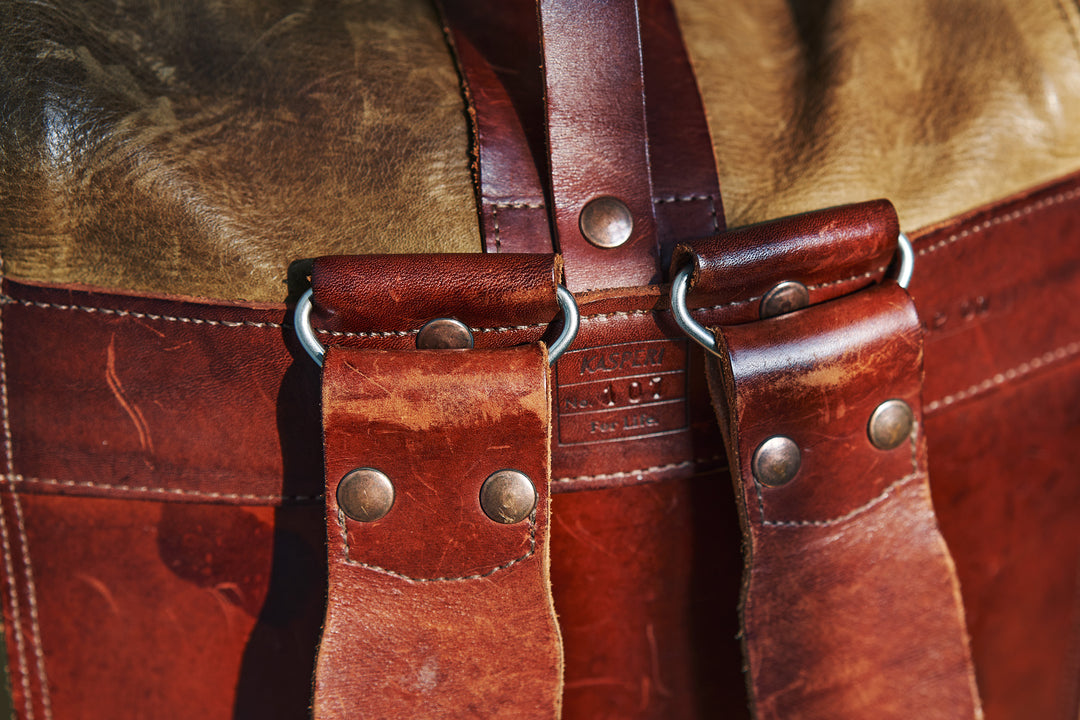
Everything Kasperi stands for is to build and leave something better here. We make durable products that get used hard, that accumulate stories in their patina that get passed down, becoming a part of your heritage. In the Hämeenlinna Workshop we're building a new culture of high quality manufacturing to Finland, that we want to leave as our heritage. The School of Leathercraft in Hämeenlinna helps train the next generations of makers. They will be working with us, and building the heritage of tomorrow for this new yet old profession.
What we are making here is a prototype for the future of European craft business. Where growth does not mean abandoning standards. Where things are designed and made for the long run. A new generations of companies that will map the way for an alternative, a future of higher integrity.